
Table of Contents
- What is Loan Settlement?
- When Should You Consider Loan Settlement?
- Step-by-Step Loan Settlement Process
- Documents Required
- Impact on Credit Score
- Advantages and Disadvantages
- Tips for Successful Loan Settlement
- Conclusion
- FAQs
What is Loan Settlement?
loan settlement is a procedure initiated by a lender when all their efforts of recovery of dues fail and the lender feels that full recovery is almost impossible. In order to cut their losses the lender offers a one time loan settlement to the borrower which is a lot lesser than the outstanding amount.
They will start by offering you to pay 75% of the outstanding amount and they will see if you are willing to take this offer. If you don’t find this attractive they will scale it down to 60%, then 50% and slowly and steadily to 25%. No matter what, they will never go below 25% of the outstanding amount.
Loan settlement is a compromise from both sides to get rid of a problem. It’s meant to keep litigation to a minimum.
Loan settlement is not a good option for future but if you are unable to repay the whole loan then your loan burden can be finished by repayment on settlement.
Introduction:-
In today’s modern financial landscape, loans have become an integral part of everyday life. From purchasing a home or vehicle to funding education or managing personal expenses, borrowing money has made it easier for individuals to achieve their goals. However, while loans provide immediate financial support, they also come with the responsibility of timely repayment. When circumstances change unexpectedly, repaying a loan can become challenging, leading to stress, defaults, and financial instability. This is where the concept of loan settlement becomes highly relevant.
Loan settlement is a financial solution that allows borrowers to resolve their outstanding debts by negotiating with their lender and paying a reduced amount instead of the total due. It is typically considered when a borrower is facing serious financial difficulties and is unable to continue making regular EMI payments. Rather than allowing the debt to spiral out of control or facing legal consequences, loan settlement provides a structured way to close the loan and move forward.
Understanding loan settlement is essential, especially in a growing economy like India, where access to credit has increased significantly over the past decade. With the rise of digital lending platforms, easy approvals, and minimal documentation, more people are taking loans than ever before. While this has improved financial accessibility, it has also increased the risk of over-borrowing and repayment challenges. Economic uncertainties, job loss, medical emergencies, business downturns, and inflation are some of the common factors that can affect a borrower’s ability to repay loans on time.
At its core, loan settlement is based on mutual agreement between the borrower and the lender. The borrower approaches the lender, explains their financial hardship, and requests a reduction in the total outstanding amount. If the lender is convinced that the borrower cannot repay the full amount, they may agree to accept a lower amount as a One-Time Settlement (OTS). Once this agreed amount is paid, the loan account is marked as “settled,” and the remaining balance is waived off.
While this may seem like an attractive option, it is important to understand that loan settlement is not a simple or risk-free process. It has long-term implications, particularly on the borrower’s credit profile. When a loan is settled instead of fully repaid, it is reported to credit bureaus with a “settled” status. This indicates that the borrower did not fulfill the original repayment obligation, which can negatively impact the credit score. A lower credit score can make it difficult to obtain loans, credit cards, or favorable interest rates in the future.
Despite these drawbacks, loan settlement remains a valuable option for individuals who are genuinely unable to repay their loans. It provides a way to reduce financial burden, avoid legal complications, and regain control over personal finances. For many borrowers, it acts as a lifeline during times of extreme financial stress.
To fully understand loan settlement, it is important to explore the situations in which it is typically used. Borrowers usually consider settlement after missing multiple EMI payments, when their loan account is classified as a non-performing asset (NPA). At this stage, lenders may initiate recovery actions, including calls, notices, and legal proceedings. Instead of ignoring these actions, borrowers should take a proactive approach and communicate with the lender. Open and honest communication can often lead to better outcomes and more favorable settlement terms.
The process of loan settlement involves several steps, starting with a detailed assessment of the borrower’s financial condition. The borrower needs to calculate the total outstanding amount, including principal, interest, penalties, and charges. Based on their current financial situation, they should determine how much they can afford to pay as a lump sum. This amount forms the basis of the negotiation with the lender.
Negotiation is a critical aspect of the loan settlement process. Borrowers should be prepared to explain their financial difficulties clearly and provide supporting documents if required. Lenders are more likely to agree to a settlement if they believe that the borrower is acting in good faith and genuinely lacks the ability to repay the full amount. The final settlement amount can vary widely depending on factors such as the type of loan, the outstanding balance, the borrower’s repayment history, and the lender’s internal policies.
Documentation plays a crucial role in ensuring a smooth and secure settlement process. Before making any payment, the borrower must obtain a written settlement agreement from the lender. This document should clearly specify the agreed amount, payment deadline, and terms of settlement. Verbal agreements or informal promises should never be trusted, as they can lead to disputes later. After completing the payment, the borrower should collect a No Due Certificate (NOC) or settlement letter as proof that the loan has been closed.
In recent years, the increasing demand for loan settlement has led to the emergence of third-party agencies and debt settlement companies. These organizations offer to negotiate with lenders on behalf of borrowers, often promising significant reductions in the outstanding amount. While some of these services can be helpful, borrowers should exercise caution when dealing with such agencies. There is a risk of fraud, hidden charges, and unethical practices. It is always advisable to verify the credibility of the agency and, if possible, deal directly with the lender.
Another important aspect to consider is the difference between loan settlement and other debt management options. For instance, loan restructuring involves modifying the terms of the loan, such as extending the tenure or reducing the interest rate, to make repayment easier. Unlike settlement, restructuring does not involve reducing the principal amount and generally has a less negative impact on the credit score. Similarly, refinancing allows borrowers to take a new loan with better terms to repay the existing loan. These alternatives should be explored before opting for settlement.
From a broader perspective, loan settlement reflects the challenges and complexities of personal finance management. It highlights the importance of financial planning, budgeting, and responsible borrowing. While loans can be useful tools for achieving goals, they should be managed carefully to avoid falling into debt traps. Borrowers should always assess their repayment capacity before taking a loan and maintain an emergency fund to handle unexpected situations.
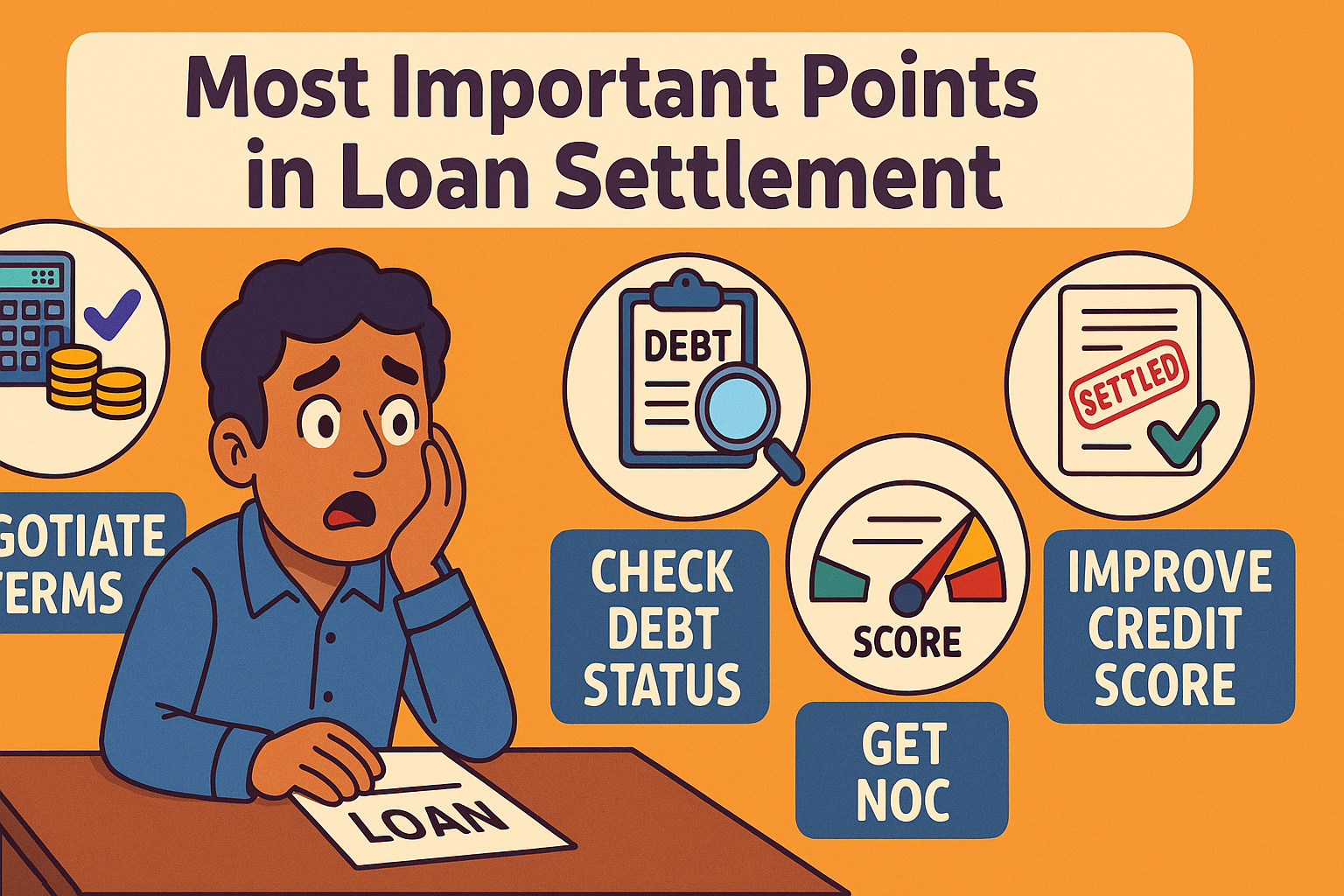 In the context of search engine optimization (SEO), loan settlement is a highly relevant and competitive topic. Keywords such as loan settlement process in India, how to settle a loan with a ba, one-time settlement loan guide, loan settlement impact on CIBIL score, and debt resolution services are frequently searched by users looking for solutions to their financial problems. Creating high-quality, informative, and user-friendly content on these topics can significantly improve website visibility and attract targeted traffic.
An effective SEO strategy for loan settlement content should include clear headings, structured formatting, keyword optimization, and valuable insights. The content should address common user queries, provide practical guidance, and maintain a conversational tone. This not only improves search engine rankings but also enhances user engagement and trust.
Moreover, it is important to ensure that the information provided is accurate, transparent, and ethical. Financial topics like loan settlement directly impact people’s lives, and misleading or incomplete information can have serious consequences. Content creators should focus on educating readers, helping them understand their options, and encouraging responsible financial behavior.
In addition to individual borrowers, loan settlement is also relevant for businesses and entrepreneurs. Small businesses, startups, and self-employed individuals often rely on loans for growth and operations. However, economic downturns, market fluctuations, and operational challenges can affect their ability to repay loans. In such cases, loan settlement can provide a way to manage liabilities and stabilize the business.
The psychological impact of debt is another important factor that cannot be overlooked. Financial stress can affect mental health, relationships, and overall well-being. Constant pressure from unpaid loans, recovery calls, and financial uncertainty can lead to anxiety and frustration. Loan settlement, by providing a clear path to debt resolution, can help reduce this stress and give borrowers a sense of relief and control.
However, it is equally important to approach loan settlement with a clear understanding of its consequences. While it offers immediate relief, it may limit future financial opportunities. Borrowers should have a long-term plan to rebuild their credit score, improve their financial habits, and avoid similar situations in the future. This may include timely bill payments, responsible use of credit, and regular monitoring of credit reports.
In conclusion, loan settlement is a powerful financial tool that can help individuals and businesses navigate difficult financial situations. It provides a practical way to resolve outstanding debt, reduce financial burden, and move towards financial recovery. However, it is not a one-size-fits-all solution and should be used with careful consideration. By understanding the process, evaluating the risks and benefits, and exploring alternative options, borrowers can make informed decisions that align with their financial goals.
Loan settlement is a financial process that allows borrowers to resolve their outstanding debt by negotiating with the lender and paying a reduced amount instead of the full loan balance. It is typically considered when a borrower is facing serious financial hardship and is unable to continue paying regular EMIs (Equated Monthly Installments). Instead of letting the loan default completely or facing legal consequences, loan settlement provides a practical way to close the account and move forward.
Understanding loan settlement is extremely important, especially in a country like India where access to credit has increased rapidly in recent years. With more people relying on loans for daily needs, education, housing, and business, the chances of financial stress have also grown. Situations like job loss, medical emergencies, business losses, or unexpected expenses can disrupt a person’s ability to repay loans. In such cases, loan settlement can act as a safety option that helps borrowers regain control over their financial situation.
At its core, loan settlement is based on mutual agreement between the borrower and the lender. The borrower explains their financial condition and inability to repay the full amount, while the lender evaluates the situation and may agree to accept a lower amount as a one-time payment. This is often referred to as a One-Time Settlement (OTS). 
Once the agreed amount is paid, the loan account is marked as “settled,” and the borrower is no longer required to pay the remaining balance.
While loan settlement may sound like an easy solution, it is important to understand that it comes with both advantages and disadvantages. On the positive side, it reduces the overall debt burden, provides immediate financial relief, and helps avoid legal actions or continuous recovery calls from lenders. It can be a practical solution for individuals who are genuinely unable to repay their loans and need a way out of financial stress.
However, there are also certain drawbacks that cannot be ignored. One of the biggest impacts of loan settlement is on the borrower’s credit score. When a loan is settled instead of fully repaid, it is reported to credit bureaus as “settled,” which indicates that the borrower did not pay the complete amount. This can lower the credit score and make it difficult to get loans or credit cards in the future. Lenders may see this as a sign of financial risk, which can affect borrowing opportunities for several years.
Another important aspect to consider is that loan settlement should always be used as a last resort. Before choosing settlement, borrowers should explore other options such as loan restructuring, EMI reduction, moratoriums, or refinancing. These alternatives may help manage the loan without negatively impacting the credit score as much as settlement does. Only when all other options fail should loan settlement be considered.
The process of loan settlement generally begins when a borrower misses multiple EMI payments and the account becomes a non-performing asset (NPA). At this stage, the lender may initiate recovery actions, including calls, notices, or legal steps. Instead of ignoring these actions, it is always better for the borrower to communicate openly with the lender and discuss possible solutions. Honest communication can often lead to better settlement terms and a smoother resolution process.
Negotiation plays a key role in loan settlement. Borrowers should be prepared to explain their financial difficulties clearly and provide any necessary proof, such as job loss letters, medical bills, or income statements. Lenders are more likely to agree to a settlement if they believe that the borrower genuinely cannot repay the full amount. The final settlement amount can vary depending on the lender’s policies, the type of loan, and the borrower’s situation, but it is usually lower than the total outstanding balance.
Documentation is another crucial part of the loan settlement process. Borrowers must always ensure that they receive written confirmation of the settlement agreement before making any payment. This document should clearly mention the agreed amount, payment deadline, and terms of settlement. After completing the payment, the borrower should collect a No Due Certificate (NOC) or settlement letter as proof that the loan has been closed. Keeping these documents safe is important for future reference and to avoid any disputes.
In recent years, the demand for loan settlement services has increased significantly, leading to the rise of third-party agencies and consultants who offer assistance in negotiating with lenders. While some of these services can be helpful, borrowers should be cautious and avoid fraudulent agents who may charge high fees or make false promises. It is always safer to deal directly with the bank or a trusted financial advisor.
When Should You Consider Loan Settlement?
You can consider loan settlement if:
- You have lost your job or income source
- You are unable to pay EMIs for a long time
- Your loan account is already in default
- You are facing serious financial hardship
Step-by-Step Loan Settlement Process 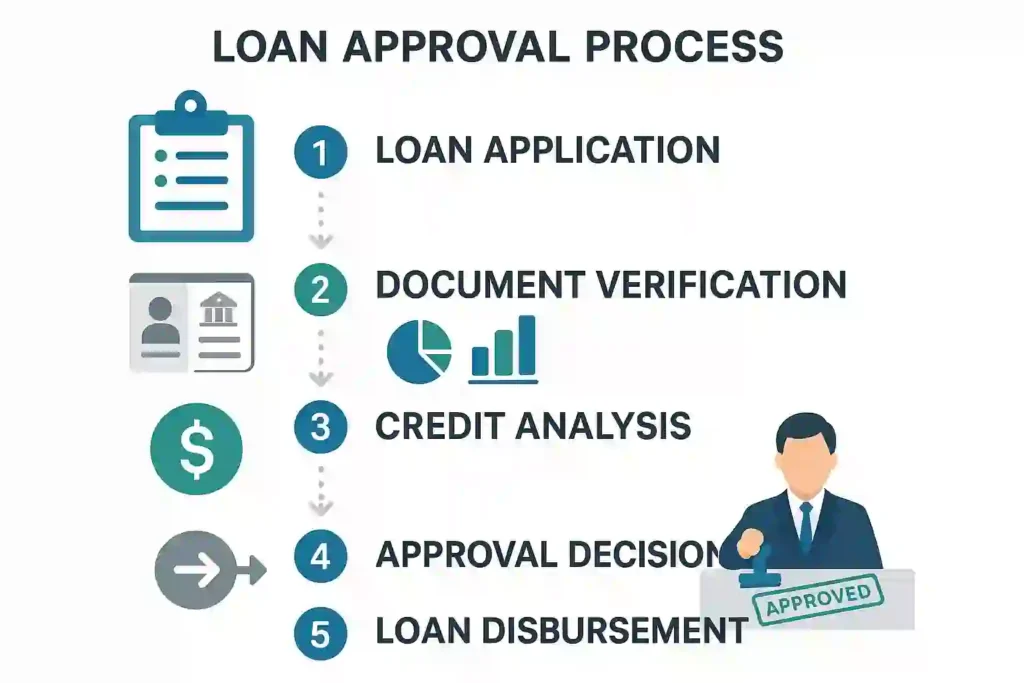
1. Assess Your Financial Situation
Understand how much you owe and how much you can realistically pay.
2. Contact Your Lender
Reach out to your bank or financial institution and inform them about your financial condition.
3. Request Settlement Offer
Ask the lender for a one-time settlement (OTS) option.
4. Negotiate the Amount
Try to negotiate a lower amount than the total outstanding balance.
5. Get Agreement in Writing
Always take written confirmation of the settlement amount and terms.
6. Make the Payment
Pay the agreed amount within the deadline.
7. Collect Settlement Letter
After payment, collect a “No Due Certificate” or settlement letter from the lender.
Documents Required
- Loan account details
- ID proof (Aadhaar, PAN)
- Income proof (if available)
- Bank statements
- Hardship proof (job loss, medical emergency, etc.)
Impact on Credit Score 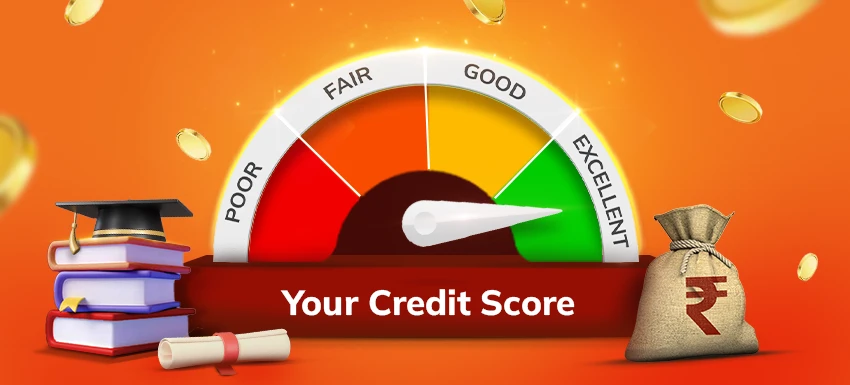
Loan settlement can negatively affect your credit score because:
- It shows that you did not repay the full loan
- Your account is marked as “settled” instead of “closed”
This can make it harder to get loans in the future.
Advantages and Disadvantages
Advantages
- Reduces total loan burden
- Helps avoid legal action
- Provides quick relief from debt
Disadvantages
- Lowers your credit score
- May affect future loan approvals
- Possible additional charges
Tips for Successful Loan Settlement
- Always communicate honestly with your lender
- Negotiate calmly and wisely
- Avoid middlemen or fraud agents
- Get everything in writing
- Try settlement only as a last option
Conclusion
The loan settlement process can help you get out of financial stress when repayment becomes impossible. However, it should be used carefully, as it impacts your credit score. Always explore other options like restructuring before choosing settlement.
FAQs
1.What is a compromise loan settlement?
A compromise loan settlement is a procedure initiated by a lender when all their efforts of recovery of dues fail and the lender feels that full recovery is almost impossible. In order to cut their losses the lender offers a one time loan settlement to the borrower which is a lot lesser than the outstanding amount.
2.How do I do a loan settlement?
Loan settlement is a negotiated agreement where a lender accepts a partial, lump-sum payment to close a debt, usually when full repayment is impossible. It negatively impacts credit scores and is marked as “settled”. Key steps include proving financial hardship, negotiating a reduced amount, getting the offer in writing, paying, and obtaining a No Objection Certificate (NOC)
1. Is loan settlement legal?
Yes, loan settlement is a legal process in India, allowing borrowers in severe financial distress to negotiate with lenders to pay a reduced, partial amount to close a debt. It is governed by Reserve Bank of India (RBI) guidelines and, while legal, it is not a right and can significantly hurt your credit score for up to 7 years.
2. How much amount can be reduced in settlement?
Loan settlements typically allow borrowers to reduce their total outstanding debt by 40% to 70%. While lenders may offer discounts ranging from 15% to 50% on average, aggressive negotiations for very old, “stale” debts can sometimes lead to higher reductions, with settlements often landing between 50% and 80% of the principal.
3. Can I take a loan after settlement?
Yes, but it may be difficult until your credit score improves.
4. How long does the settlement process take?
It can take a few weeks to a few months.